Branching Bonuses Transform Reel Probabilities Through Player Choices
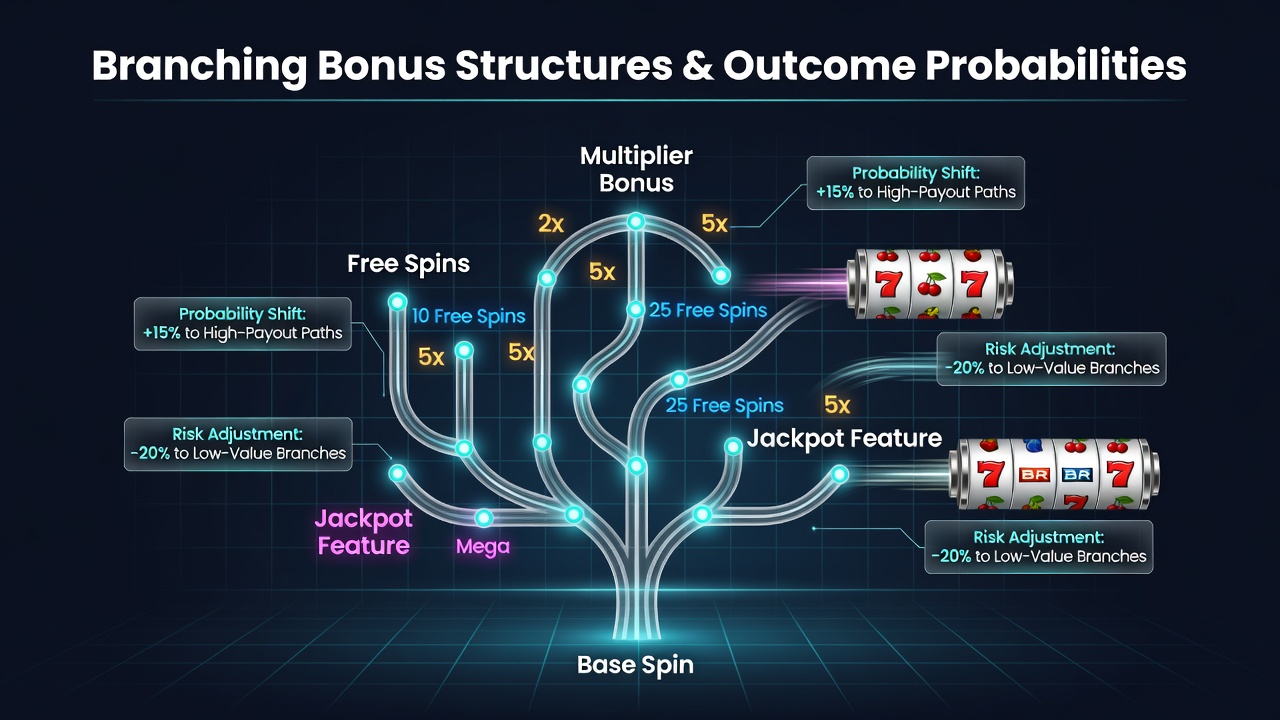
Interactive reel experiences incorporate branching bonus structures that present players with decision points during bonus rounds and these choices directly modify the underlying outcome probabilities. Game developers design these paths so each selection alters the distribution of potential results while maintaining the overall return to player percentage across the entire game.
Designers calculate the probabilities for each branch before release and they adjust the payout tables accordingly to ensure the mathematical model remains consistent. Data from regulatory testing shows that branching mechanics can shift the frequency of high-value outcomes by redistributing risk across multiple possible sequences rather than relying on fixed reel combinations alone.
Mechanics Behind Branching Structures
Branching bonuses operate through decision trees where players select from several options at key moments and each path carries its own set of reel configurations or multiplier values. The system recalculates remaining probabilities in real time so that the expected value stays aligned with the game's certified RTP parameters throughout the round.
Studies from the University of Nevada's gaming research division indicate that these structures introduce conditional probability adjustments because earlier choices influence the available outcomes in later stages. Players encounter scenarios where selecting a safer path reduces variance while riskier selections increase the potential for larger multipliers at the cost of lower trigger rates on subsequent features.
Impact on Outcome Distributions
Outcome probabilities change when branching occurs because the game engine removes certain reel strips or symbol combinations from the remaining pool after each decision. This process creates a dynamic probability space that differs from traditional fixed-reel slots where every spin draws from the same set of possibilities.
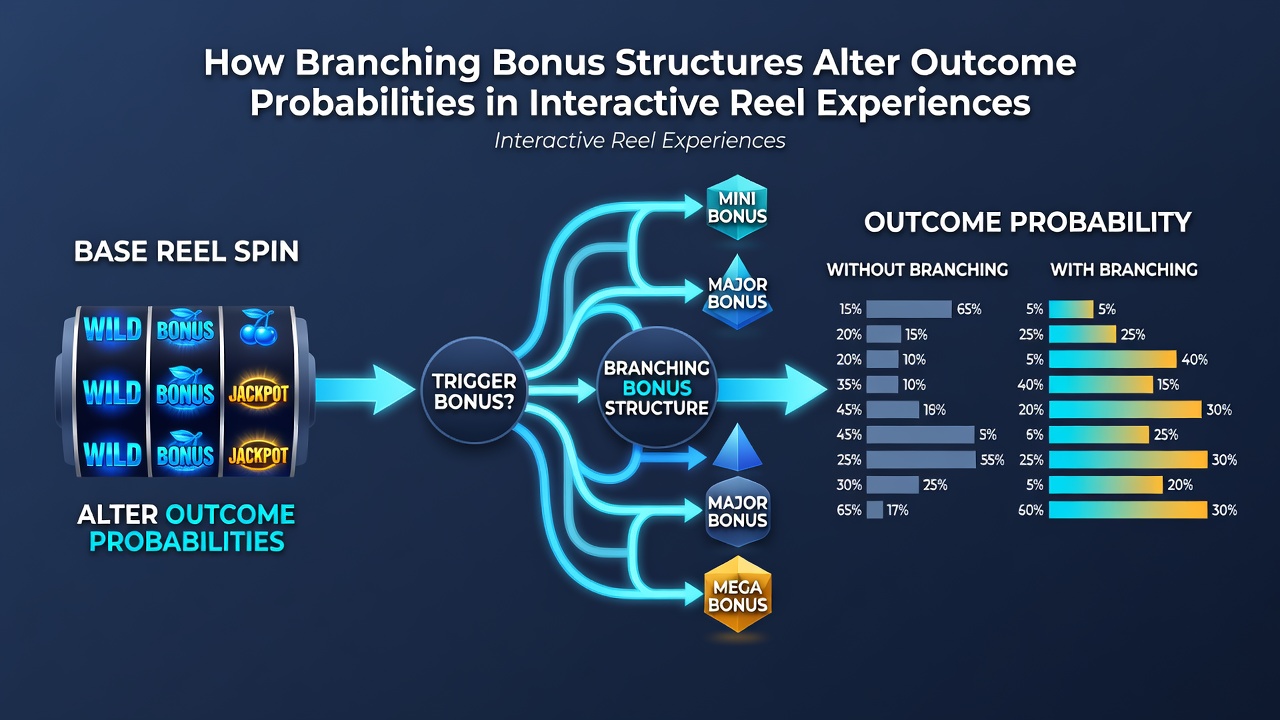
Figures released by the Nevada Gaming Control Board in July 2026 highlight how certified titles with branching mechanics demonstrate measurable shifts in hit frequency across player-selected paths. The reports detail that games featuring three or more branches show variance increases of up to 18 percent compared to linear bonus designs while still preserving the target RTP over large sample sizes.
Developers apply weighted random number generators to each branch so the overall probability matrix accounts for every possible player choice combination. This approach prevents any single path from dominating the long-term return statistics and ensures compliance with jurisdiction-specific testing standards.
Examples from Recent Releases
Several titles launched in early 2026 demonstrate branching mechanics through pick-and-choose rounds that lead to distinct reel modifiers or free spin quantities. One case involved a game where players chose between three chests and each chest altered the reel layout for the following spins thereby changing the symbol distribution probabilities mid-round.
Industry analyses from the European Gaming and Betting Association reveal that such designs appear more frequently in mobile-optimized releases because they add engagement layers without requiring additional reel complexity. The data shows branching features trigger in roughly 12 percent of base game spins across sampled titles yet contribute disproportionately to total return variance.
Statistical Adjustments and Testing
Mathematical models for branching bonuses require extensive simulation runs that test every decision combination against millions of possible outcomes. Regulators mandate these simulations before approval to verify that no path creates an unintended advantage or disadvantage beyond the stated parameters.
Research published through academic channels demonstrates that branching structures can compress or expand the distribution curve depending on how many decision points exist and how the game weights each branch. Titles with deeper trees tend to produce wider outcome spreads which affects session-level volatility even when the base RTP remains unchanged.
Conclusion
Branching bonus structures reshape outcome probabilities by introducing conditional changes at decision points and these alterations maintain mathematical balance through careful weighting of each path. Regulatory data from multiple jurisdictions confirms that such mechanics expand design possibilities while preserving certified return metrics across extensive play volumes. The approach continues to evolve as developers refine how choices interact with reel mechanics and probability engines.